The landscape of B2B SaaS is undergoing a profound transformation, driven by rapid advancements in generative artificial intelligence. Far from being a mere buzzword, generative AI is deeply embedding itself into the core functionalities of enterprise software, reshaping how businesses operate. This article explores the significant impact of generative AI on B2B SaaS, specifically how integrated AI copilots, advanced automation, and hyper-personalization are not just enhancing productivity but are fundamentally adding new layers of value to existing software, fostering unparalleled efficiency and innovation.
THE RISE OF AI COPILOTS IN B2B SAAS
Enhancing Productivity Across Functions
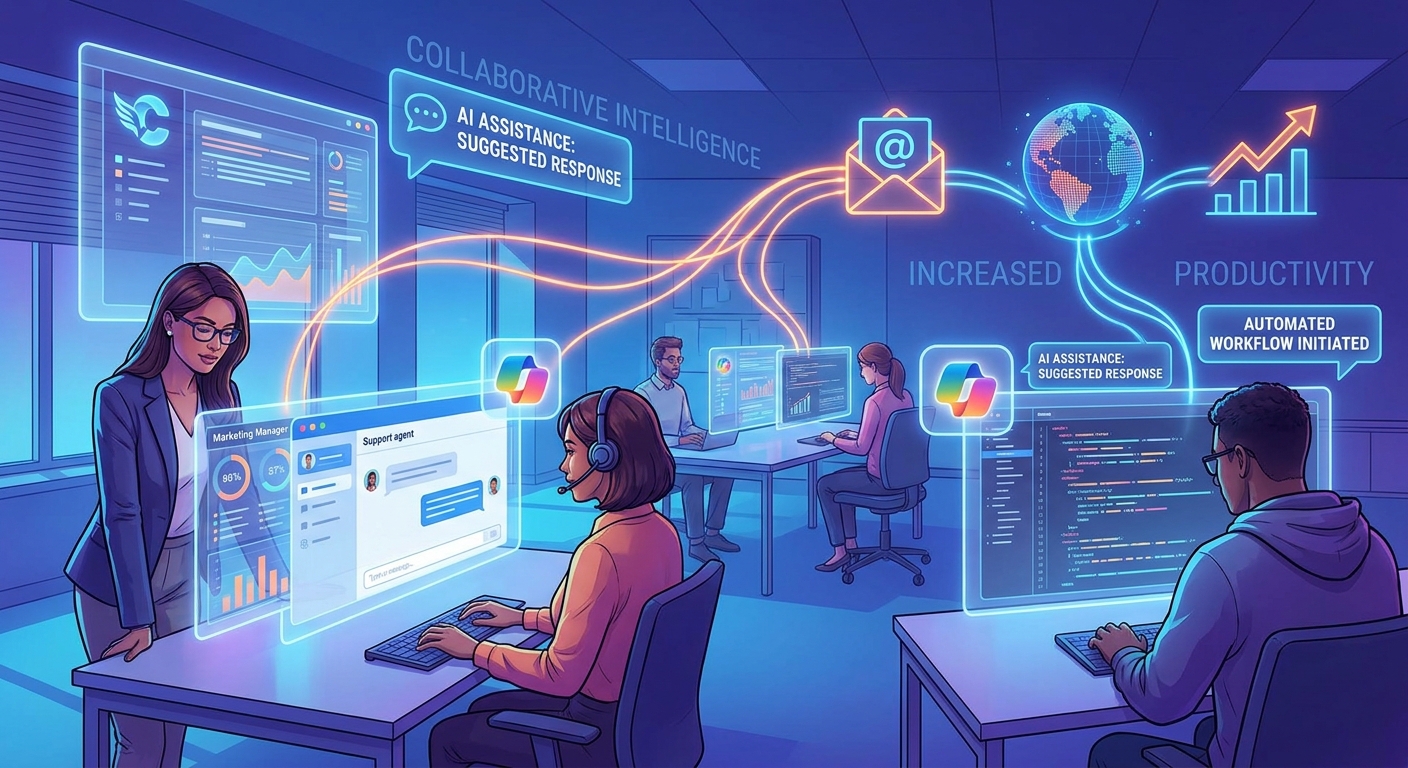
AI copilots represent a paradigm shift in human-software interaction within B2B environments. These intelligent assistants augment user capabilities. In sales, copilots draft compelling emails, summarize call transcripts, and suggest optimal follow-up actions. For marketing, they generate initial content drafts, optimize campaign messaging, or analyze performance data. Customer service agents benefit from AI suggesting personalized responses or rapidly retrieving relevant knowledge. Developers leverage copilots for code generation and debugging. The immediate benefit is substantial reduction in manual effort, accelerated workflows, and the liberation of human employees to focus on strategic, higher-value tasks requiring creativity and critical thinking.
Democratizing Expertise
Beyond mere efficiency, AI copilots democratize expertise. They make complex functionalities and specialized knowledge accessible to a broader range of users, regardless of prior experience. A new marketing hire can quickly generate sophisticated ad copy with guidance, or a non-technical manager can interpret complex data analytics with AI-driven explanations. This streamlines onboarding and upskills the workforce, enabling more employees to contribute effectively to specialized tasks, fostering a more capable and agile team.
ADVANCED AUTOMATION BEYOND RPA
Intelligent Workflow Orchestration
While Robotic Process Automation (RPA) has long been a staple, generative AI elevates automation. Unlike rule-based RPA, generative AI understands context, generates novel content, and makes nuanced decisions. This enables intelligent workflow orchestration where multi-step, complex processes can be automated end-to-end. Imagine a sales pipeline where lead qualification, personalized email nurturing, and initial proposal drafting are intelligently orchestrated. In operations, generative AI can automate market report synthesis, generating insights, or dynamically adjust inventory based on predictive demand and real-time supply chain data. The result is a far more agile and responsive business operation.
Data Synthesis and Insight Generation
One of the most transformative aspects is generative AI's ability to process, synthesize, and derive meaning from vast amounts of unstructured data—customer feedback, market research, internal documents. Traditional analytics often struggled with this scale. Generative AI rapidly identifies trends, extracts key sentiments, and generates actionable insights that might otherwise take human analysts weeks. This capability empowers strategic decision-making, allowing businesses to react faster to market shifts, identify new opportunities, and understand customer needs with unprecedented depth.
HYPER-PERSONALIZATION AT SCALE
Tailored User Experiences
Personalization is an expectation in B2B. Generative AI delivers hyper-personalization, providing dynamic, context-aware, and individually tailored experiences at scale. Within a SaaS product, this means personalized dashboards adapting to a user's role and activity, customized content recommendations, or adaptive learning paths for new features. This deep level of personalization significantly increases user engagement, product stickiness, and overall satisfaction, making the software feel indispensable to each user.
Precision Marketing and Sales
In marketing and sales, generative AI allows for unparalleled precision. Marketers can generate highly specific messages for individual prospects, moving beyond segment-based approaches to true one-to-one communication. Sales teams leverage AI to tailor pitches in real-time, drawing on comprehensive prospect data and behavioral insights for impactful conversations. This hyper-targeted approach leads to significantly higher conversion rates, strengthens customer relationships, and optimizes resource allocation.
CHALLENGES AND BEST PRACTICES FOR IMPLEMENTATION
Data Security and Privacy Concerns
Integrating generative AI into B2B SaaS brings challenges, paramount among them being data security and privacy. Enterprises deal with sensitive information, so AI leverage requires robust security protocols, stringent data governance, and strict adherence to regulations like GDPR and CCPA. SaaS providers must prioritize ethical AI development, ensuring data anonymity, securing model inputs/outputs, and maintaining transparency about data usage.
Integration and Scalability
Successful AI implementation hinges on seamless integration with existing IT infrastructure. B2B SaaS solutions must integrate smoothly without disrupting current workflows. Furthermore, AI capabilities must be scalable, handling growing data volumes and an increasing user base without compromising performance. This requires careful architectural planning and robust cloud infrastructure.
Continuous Learning and Adaptation
Generative AI models are not static; their effectiveness relies on continuous learning. B2B SaaS providers must establish robust feedback loops to monitor model performance, gather user input, and regularly fine-tune AI models with new data. This iterative process ensures the AI remains accurate, relevant, and continues to deliver value, evolving alongside user needs and business demands.
CONCLUSION
Generative AI is not merely an enhancement; it is a fundamental redefinition of what B2B SaaS can achieve. By embedding AI copilots, advanced automation, and hyper-personalization, SaaS providers are empowering businesses to operate with unprecedented efficiency, intelligence, and agility. The future of B2B SaaS is inextricably linked with generative AI, evolving from passive tools to active, intelligent partners that drive innovation, streamline operations, and create deeply personalized experiences. Enterprises embracing these capabilities will gain significant competitive advantage and unlock new frontiers of productivity and growth.